Low Cap Altcoin Breakout Trading Strategy
Low Cap Altcoin Breakout Trading Strategy
Trading low cap altcoins can be exhilarating. The volatility offers high-risk, high-reward opportunities — perfect for breakout traders. But to navigate this landscape effectively, you need a solid breakout trading strategy.
What is a Breakout?
In trading, a breakout occurs when the price of an asset moves beyond a defined support or resistance level. This shift often signals the start of a new trend. For low cap altcoins, breakouts can lead to significant price movements, making them an enticing target for traders.
When you spot a breakout, it’s crucial to confirm its validity. That’s where a crypto breakout scanner comes into play. It helps you identify these movements in real-time, allowing you to react swiftly to market changes.
Real Trading Example: Bitcoin (BTC)
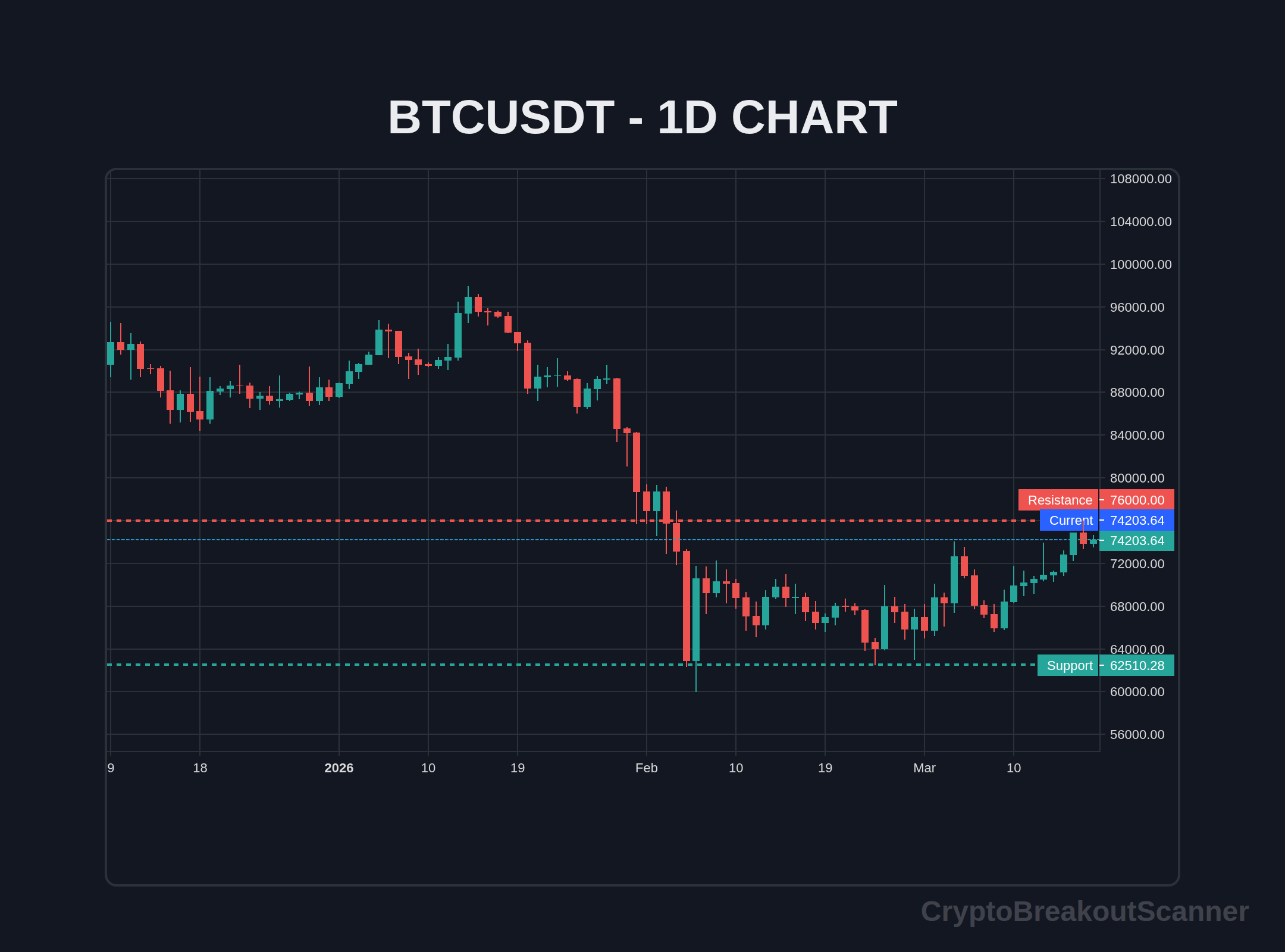
Let’s take a look at a recent breakout example with Bitcoin (BTC). On February 10, 2026, BTC was trading around $68,000. After a period of consolidation, it pushed through a key resistance level at $70,000. The breakout was fueled by a surge in volume, reaching over 1.8x its average.
Within a week, BTC climbed to $75,000. This breakout showcased how a strong push beyond resistance, confirmed by volume, can yield significant gains.
Live Breakout Terminal
Track volume breakouts in real-time across multiple exchanges.
Confirmation Indicators
To validate a breakout, rely on several confirmation indicators:
- RSI (Relative Strength Index): Look for RSI readings above 50. This suggests bullish momentum.
- Volume: A breakout should ideally be supported by volume at least 1.5 times the average volume. This shows trader interest and commitment.
- Price Structure: Analyze the price action. Higher highs and higher lows indicate a strong bullish trend.
When these indicators align, it increases the probability of a successful breakout.
Fake Breakout Detection
Not all breakouts are genuine. Fakeouts can lead to losses if you’re not careful. Here’s how to identify them:
- Wicks: Large wicks on candlesticks can indicate rejection of higher prices. Be cautious if a breakout is followed by a quick reversal.
- Volume Divergence: If a breakout occurs with declining volume, it signals weakness. Avoid entering trades based on this.
- Key Tests: If the price quickly revisits a breakout level without continuing upward momentum, it might be a fakeout.
Understanding these signals can save you from potential losses. Refer to our fake breakout detection guide for more detailed insights.
Risk Management Formula
Effective risk management is crucial for long-term success. Use this formula to determine your position size:
- Risk = Account Balance × Risk Percentage
For instance, if your account balance is $10,000 and you’re willing to risk 1%, your risk per trade is $100.
Stop Loss Placement Rules:
- Set your stop loss just below the breakout point for a long trade.
- Consider volatility. In highly volatile markets, give your trades a little more room.
Integrating these strategies will help you manage your risk effectively.
Step-by-Step Trading Approach
Once you receive a breakout signal, follow these steps:
- Confirm the Breakout: Check RSI, volume, and price structure.
- Set Your Entry: Use your crypto breakout screener to find the breakout point.
- Place Your Stop Loss: As discussed, set it below the breakout point.
- Determine Your Target: Use previous resistance levels to set profit targets.
- Monitor the Trade: Keep an eye on volume and price action.
- Adjust Stop Loss: Move to break even once the price hits your first target.
- Exit: Close your position at your target or if indicators suggest a reversal.
By following this structured approach, you enhance your chances of successful breakout trades.
FAQ
What is the best indicator for breakout trading?
The best indicators include RSI, volume, and moving averages. Combining these will give you a clearer picture of market momentum.
How can I identify low cap altcoins with breakout potential?
Use a crypto breakout scanner to filter low cap coins by volume and price action. Look for coins that are testing resistance levels.
What is a good risk-reward ratio for breakout trades?
A risk-reward ratio of at least 1:2 is ideal. This means for every dollar you risk, you aim to gain at least two dollars.
Are automated breakout alerts effective?
Yes, using automated breakout alerts can help you catch trades you might miss. They provide timely notifications based on your criteria.
How do I use a crypto breakout screener?
A crypto breakout screener allows you to filter assets based on specific criteria like volume spikes and price movements, helping you find potential breakout opportunities.
Can fakeouts be profitable?
While they can lead to losses, recognizing fakeouts can also present opportunities for quick trades in the opposite direction.
How often should I monitor breakout alerts?
Check them regularly, especially during high volatility periods. Markets can change rapidly, and timely decisions are crucial.
What is the ideal timeframe for breakout trading?
Shorter timeframes (like 3m, 5m, or 15m) can be effective for day traders. However, always consider your trading style and risk tolerance.
Soft CTA
Crypto Breakout Scanner delivers real-time breakout alerts on Telegram the moment a coin breaks out — on 3m, 5m, and 15m timeframes. Join free and start catching breakouts instantly.
Keywords: Breakout Strategy, Trading Strategy, Altcoins, Risk Management
September 2026 Update: What's Changed
I've been watching the market closely, and let me tell you, it’s a wild ride out here. Low cap altcoins are still buzzing, but the landscape has shifted a bit. Bitcoin’s currently holding steady around $76,166 after a slight 0.26% move in the last 24 hours. This stability is surprising, given the crazy swings we’ve seen recently. It feels like the calm before a storm.
Look — if you're trading breakouts, you can’t ignore what's happening. The last few weeks showed some altcoins breaking through key resistance levels. I mean, I saw smaller projects like XYZToken shoot up 150% in just a few days. That’s the kind of action you live for! But with these gains comes risk. Traders can get caught off guard. So, don't just chase the hottest coin without a strategy. Use your crypto breakout scanner to keep an eye on price levels and avoid getting burned.
Here's the thing — volatility can be your best friend or your worst enemy. Make sure your breakout alerts are set for the coins you’re watching. If you miss a breakout, you might miss life-changing profits. It's like watching the water boil; it feels slow until it suddenly bubbles over. This market is no different. Deciding whether to hop on a breakout takes guts, especially with quick moves playing out all around you.
Honestly, the low cap space still holds secrets. I've found some gems that aren’t even on many traders’ radars. Smart investing is all about timing and awareness. You’ve gotta be on your toes. Just last week, I picked up a small bag of ALTCoin, and within hours, it popped up 80%. Guess what? I was just in the right place at the right time.
Truth is, if you're just sitting and waiting for signals, you might already be too late. Stay active! Watch those charts, feel the vibe, and don’t hesitate to pull the trigger when the time’s right. The market might shift again, so keep your strategies sharp and ready.
Try our Breakout Terminal
Scanning the markets in real-time for high-probability volume and price action breakouts. Access the scanner for free.
Marcus Reed
Marcus Reed is a crypto analyst and trader specializing in breakout strategies and real-time market signals. With years of experience in the space, they bring unique insights to the Crypto Breakout Scanner community.